


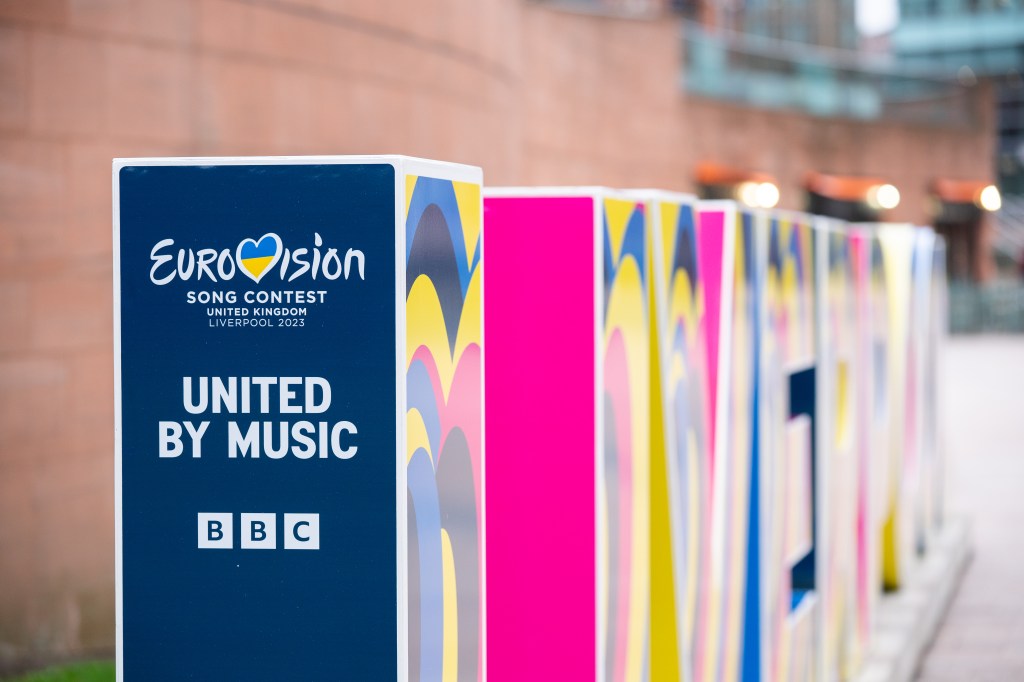
Eurovision has unveiled its new and permanent slogan, United By Music. Callum Rowe explains why having a permanent identity is key for the growth of the contest.

United By Music. A slogan dreamed up after the first working meeting between Eurovision 2023’s host broadcasters.
United By Music. A slogan that bucked the trend of splitting Eurovision fans down the middle into a love camp and a hate camp, coaxing them to pitch their tents in the former.
United By Music. A slogan that politely nodded to its 20 predecessors as it bound a continent in the most steadfast edition of Eurovision in a generation.
United By Music. A slogan that will lead Eurovision into the next chapter and beyond.
I’m the first proponent of each edition of the Eurovision Song Contest having as much individuality and unique identity as possible. From the stage to the presenters, the artwork to the scoreboard, the script to the postcards, the theme music to the slogan, they all help to create a one-off Eurovision brand. But that’s the problem.
If you ask the John Smiths and the Ola Nordmanns of the world about Eurovision, they aren’t going to get giddy about the slogans of yesteryear. Each May, the viewing public are presented with 30 or 40-odd songs for their delectation, with the wraparound slogans, theme music and artwork drifting around in the periphery. Why even start to consider what a slogan says or means when a Finnish rapper is Cha Cha Cha-ing and two Austrian songstresses are Poe Poe Poe-ing?
Eurovision bosses have been trying to capitalise on the success of the contest for years, especially post-pandemic. The contest has been a springboard for artists to reach higher heights – think Måneskin essentially becoming co-presidents of the rock music scene and Käärijä being crowned Best Nordic Act at the recent 2023 MTV Europe Music Awards. Established artists want to be seen on the Eurovision stage – think Justin Timberlake, Madonna and Roger Taylor. Viewership of the contest and online engagement are both at sensational and record-breaking highs. The EBU has a very valuable and extremely marketable commodity on its hands, and it needs to work hard to ensure the bubble doesn’t burst. A consistent visual identity is part of any brand’s key growth strategy, so it makes total sense for Eurovision to be operating in the same way.
In the press release announcing the permanency of the Eurovision slogan, after the speaking about the power and the emotion of United by Music, Eurovision Executive Supervisor Martin Österdahl said: “As the popularity of the Eurovision Song Contest continues to grow around the world, we believe using the same slogan annually will help our brand become even stronger.” Österdahl isn’t daft. He’s an operator almost like no other. He’s tactically astute and understands the course Eurovision needs to pursue to stay relevant and to keep eyeballs pointing in the right direction. Brand Eurovision is a key policy, and building it up and strengthening it is at the top of the manifesto.
Österdahl and his team did not deliberately set out to stifle the creativity of each future host city and host broadcaster by taking away a customisable aspect of the contest. Individual slogans are the victim of the growth of a contest we all want to see expand and thrive.
Broadcasters are adaptable and will find new ways of putting their own fingerprints on a bigger brand that will inevitably keep growing and growing.
The sadness of consigning individual slogans to history will be fleeting as we focus on the bigger picture. The songs and the people make Eurovision, not words that are thrown aside after fewer than 12 months.
 About The Contest